
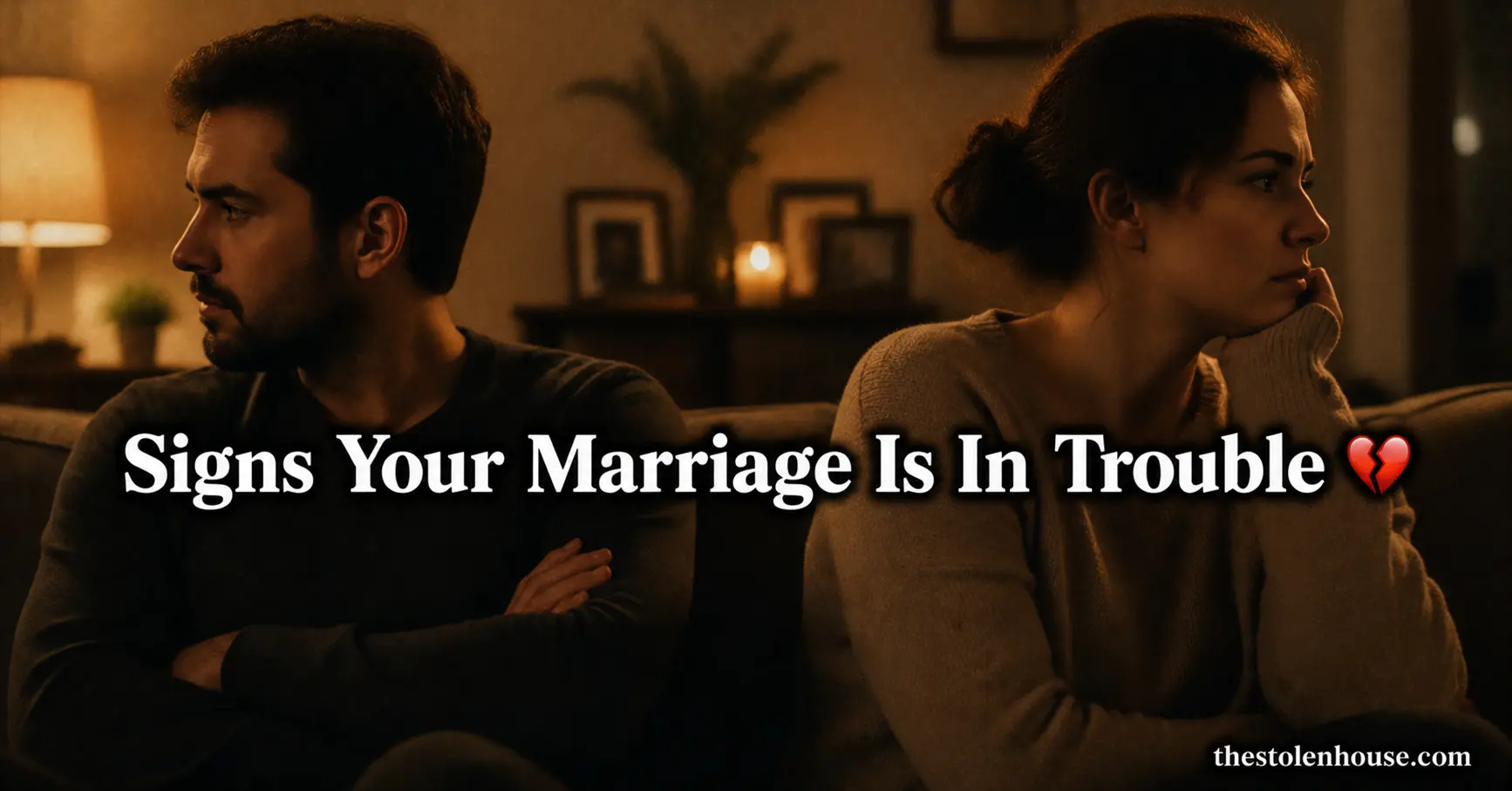
Something feels different.
You cannot always put your finger on it. Life looks normal from the outside — the house, the routine, the kids, the dinners. But underneath all of it, something has quietly shifted. The warmth that used to come so naturally now takes effort. The conversations feel surface-level. The distance between you is not physical — it is something harder to name.
If you are reading this, you already sense it. And that instinct matters.
Because the marriages that fall apart do not usually end in one dramatic moment. They end in a thousand small moments of disconnection — each one easy to explain away, until one day there is nothing left to explain.
This article is about recognizing those moments before they become permanent — and what to actually do about it.
Why Marriages Fall Apart Slowly — Not Suddenly
Most people imagine that troubled marriages come with obvious warning signs. Explosive fights. Obvious affairs. Clear breaking points.
The reality is quieter. And in many ways, more dangerous.
Research on marriage and divorce consistently shows that relationship deterioration happens gradually — through patterns of emotional withdrawal, unmet needs, and communication breakdown that accumulate over months and years before either person fully recognizes what is happening.
By the time it feels like a crisis, the distance has often been building for a very long time.
This is why recognizing the early signs that your marriage is in trouble matters so much. Not because every troubled marriage ends in divorce — but because the earlier you see what is happening, the more power you have to change it.
Signs Your Marriage Is In Trouble
You Have Stopped Talking — Really Talking
Not logistics. Not schedules. Not who is picking up the kids or what is for dinner.
Real conversation. The kind where you tell each other what is actually going on inside — your fears, your hopes, what you noticed today that made you feel something.
When did you last have that?
If your conversations have reduced to the functional minimum — to managing life together without actually connecting in it — that is one of the earliest and most significant signs your marriage is in trouble. Because emotional intimacy does not survive on logistics alone.
You Feel More Like Roommates Than Partners
You share a home. You share responsibilities. You might even share a bed.
But somewhere along the way, the partnership started feeling more like a practical arrangement than a chosen relationship. The affection that used to happen naturally now feels forced or absent. The moments of genuine connection are rare enough that you notice them when they happen — because they are exceptions rather than the norm.
This is not about passion fading with time — that is normal and manageable. This is about the fundamental sense of being chosen by each other, which should not fade, and which can be rebuilt when it does.
Small Things Cause Disproportionate Conflict
The argument is technically about the dishes. Or the way something was said. Or a plan that changed at the last minute.
But the real argument — the one underneath — is about something much bigger. About feeling unheard. About patterns that have been building for years. About needs that have gone unmet so long, they have curdled into resentment.
When the small things start carrying the weight of everything unsaid, it is a sign that there are larger, unaddressed issues in the relationship that need real attention — not more conflict management, but genuine, honest conversation.
Physical Affection Has Disappeared
Not just intimacy. Affection. The small, daily, non-sexual touch that communicates — without words — that you still choose each other. A hand on the shoulder. A kiss that is not purely routine. Reaching for each other on the couch.
Physical disconnection in a marriage is both a symptom and a cause. It reflects emotional distance — and it deepens it. Because touch is one of the most fundamental ways human beings communicate safety, love, and belonging to each other.
When it disappears, both partners feel its absence — even if neither one says so.
You Have Stopped Trying To Impress Each Other
In the beginning, you made an effort. You thought about what would make them happy. You noticed what they were wearing. You planned things with them in mind.
When did that stop?
Not the grand gestures — those are never sustainable. But the small, consistent effort of choosing each other. Of saying, through action, that this person and this relationship are worth showing up for — deliberately, not just habitually.
When both people stop making an effort, the relationship starts running on fumes. It survives for a while on history and habit. But it does not thrive. And eventually, it starts to feel like something being maintained rather than something being lived.
You Keep Score
Every favor is logged. Every sacrifice is remembered and privately resented when it feels unreciprocated. The emotional ledger between you has become a source of tension rather than irrelevant, the way it is in genuinely connected marriages.
Scorekeeping is one of the relationship researcher John Gottman identified as a predictor of relationship decline. It signals that the fundamental trust and goodwill in the relationship has eroded — that the default assumption has shifted from “we are on the same team” to “I need to protect myself in this dynamic.”
You Are Lonely – Even When They Are Right There
This is perhaps the most painful sign of all. Not loneliness from physical absence. Loneliness from emotional absence.
You are sitting in the same room. And you feel completely alone.
That feeling — of being unseen by the one person who is supposed to see you most clearly — is one of the most quietly devastating experiences in a marriage. And it is a sign that the emotional connection between you needs urgent, genuine attention.
You Fantasize About Life Without Them
Not in an action-oriented way. Just — a quiet wondering. What would life be simpler, easier, less heavy?
When these thoughts become frequent or feel like relief rather than guilt, they are worth taking seriously. Not as a sign that the marriage is over. But as a sign that something in the current dynamic has become genuinely unsustainable, and that change is needed.
You Have Stopped Resolving Conflicts
The argument ends. But nothing actually gets resolved. The same issues resurface, in different forms, again and again. Because the conversation never goes deep enough to address what is actually happening underneath.
Gottman’s research identifies what he calls “perpetual problems” — issues that 69% of couples argue about repeatedly without ever fully resolving. The couples who stay together are not the ones who solve these problems. They are the ones who learn to have genuine, respectful conversations about them — even without resolution.
When the conversations stop happening at all — when conflict ends in silence or explosive distance rather than any kind of genuine engagement — the marriage is losing its capacity to repair itself.
You cannot remember the Last Time You Laughed Together
Not politely. Genuinely. The kind of laughter that comes from knowing someone well enough to find the same things funny — from shared history, inside references, the quiet humor of a long relationship.
Laughter in a marriage is not trivial. It is one of the most reliable indicators of genuine connection and emotional safety. When it disappears — when interactions have become too heavy or too distant for lightness — something important has been lost.
How To Fix It Before It Is Too Late
Recognizing the signs your marriage is in trouble is not the end of the story. For most marriages — even ones that feel very far gone — genuine repair is possible. But it requires more than good intentions.
It requires understanding what actually went wrong. Not just the surface arguments, but the deeper patterns — the unmet needs, the emotional withdrawal, the specific ways disconnection built over time — and what genuinely works to reverse them.
Start With One Honest Conversation
Not a confrontation. A conversation. One where you say — calmly, without blame — that you have noticed the distance and you do not want to keep pretending it is not there.
This single act — breaking the silence with honesty rather than accusation — is one of the most powerful things you can do for a struggling marriage. Because most of the damage in troubled marriages happens in silence. In the things left unsaid. The distance grows because neither person knows how to start.
Start.
Choose Each Other – Deliberately
Every day, find one small way to communicate that you are still choosing this person and this marriage. Not because you have to. Because you want to.
It does not have to be grand. A genuine compliment. A moment of real attention. Putting the phone down and actually being present. These things seem small. In a struggling marriage, they are enormous.
Get Real Support
Marriages do not repair themselves through willpower alone. The patterns that create disconnection are deeply ingrained — and reversing them requires real tools, real understanding, and often, real guidance.
Whether that is couples therapy, a structured program designed for exactly this situation, or both, getting support is not an admission of failure. It is the single most loving thing you can do for your marriage and your family.
85,000+ copies sold — Save The Marriage System works
Is It Too Late
This is the question underneath everything else.
The honest answer: it is too late far less often than people fear. Marriages that feel completely broken have been rebuilt. Couples who slept in separate rooms for years have found their way back to genuine intimacy. Relationships where one or both people had emotionally checked out have been restored — not to what they were before, but to something more honest and more durable.
What it requires is not perfection. Not the absence of pain. Not both people are ready at the same moment.
It requires one person being willing to understand what actually went wrong — and what genuinely works to create change. Even if that person starts alone.
Because sometimes one person changing how they show up in a marriage is enough to shift the entire dynamic. Not always. But more often than people expect.
🔥 Start here — the Save The Marriage System has helped thousands
The Marriage Worth Saving
Not every marriage should be saved. Some relationships are genuinely unhealthy — built on patterns of disrespect, harm, or fundamental incompatibility that cannot be resolved.
But most troubled marriages are not in that category. Most are simply two people who started genuinely choosing each other — and gradually, without fully realizing it, stopped. Who got busy and distant and tired. Who stopped having the conversations that matter? Who let the small disconnections accumulate until they became the whole story?
Those marriages are worth fighting for.
If yours is one of them — if somewhere underneath the distance and the exhaustion there is still something real — then the fact that you are reading this matters.
It means you have not given up. And that is where every saved marriage starts.
Did this resonate? Save this article and share it with someone who needs to read it—more honest relationship advice at The Stolen House — where healing hearts find their way home.
Read more:
What Makes a Man Obsessed With a Woman – 10 Psychological Triggers He Cannot Explain