

If you are trying to learn how to understand male psychology in relationships, start by dropping the idea that every man thinks, loves, argues, or communicates in the same way. Gender can shape social expectations, but personality, attachment history, culture, family patterns, stress, and past relationships matter too. The most useful approach is not to memorize stereotypes; it is to notice how the specific man in front of you handles closeness, conflict, vulnerability, affection, responsibility, and independence. This guide gives you a practical framework for doing that without guessing, mind-reading, or trying to manipulate his behavior.
Many women search for “male psychology” because a partner’s behavior feels confusing: he may care but struggle to talk, pull inward when stressed, or show love more through actions than words. Those patterns can happen, but they are not universal. Use research as context, then verify your interpretation through observation and honest conversation.
Quick Takeaway: Use psychology as a lens, not a script. Ask what a pattern means for this man, verify your interpretation through conversation, and judge the relationship by repeated behavior rather than one emotional moment.
1. How to Understand Male Psychology in Relationships Without Stereotyping
The first step in how to understand male psychology in relationships is recognizing that “men are like this” is usually too broad to be useful. Research on romantic relationships can identify trends, but trends do not tell you what an individual partner believes or needs. A man who grew up in an emotionally expressive family may communicate very differently from a man who learned that vulnerability was unsafe. Treating both as if they share one fixed “male mind” can cause you to miss what is actually happening.
A better approach is to look for stable personal patterns. Notice whether he tends to process feelings out loud or privately, whether he needs time before difficult conversations, how he asks for reassurance, what makes him feel respected, and how he behaves when he is overwhelmed. Then ask direct questions instead of assuming you already know the answer. “When you get quiet after a hard day, do you want space first or would support help?” gives you more useful information than deciding that all men need to be left alone.
Gender expectations can influence behavior without determining it. Recent scholarship challenges simplistic assumptions about men’s emotional investment and suggests that, for some men, a romantic partner may be an especially important source of intimacy and emotional support. Male emotional needs should not be dismissed as shallow or purely physical.
Emotional needs in relationships → how to identify your partner’s emotional needs without guessing
2. Understand That Some Men Process Before They Speak
One common source of conflict is timing. Some people can name what they feel while the feeling is happening; others need quiet, movement, sleep, or distance before they can organize their thoughts. If your partner says “I need a little time,” that may be emotional processing rather than rejection. The important distinction is whether he returns to the conversation after the pause or repeatedly uses silence to avoid responsibility.
Pay attention to the difference between temporary withdrawal and chronic emotional unavailability. A healthy pause has structure: “I’m too worked up to talk well right now. Can we come back to this tonight?” Avoidance has no return point. You do not need to chase someone through a shutdown, but you also do not have to accept indefinite ambiguity.
Decision Check: When he asks for space, does that space help him return calmer and more honest, or does it simply make difficult topics disappear? The answer tells you more than the fact that he became quiet.
3. Watch How He Shows Care, Not Only How He Talks About It
People express affection differently, and some men may communicate care more comfortably through behavior than through emotionally elaborate language. He may solve a practical problem, remember something you mentioned weeks ago, make sure you get home safely, take responsibility for plans, or quietly make your life easier. Those actions can be emotionally meaningful even if he is not naturally poetic or highly verbal.
At the same time, “he shows love differently” should not excuse neglect. Actions matter, but so do responsiveness, respect, and the ability to discuss important issues. Look for a pattern in which his way of caring is understandable and your emotional needs have room to exist.
This is one reason small moments deserve attention. The Gottman Institute describes “bids for connection” as everyday attempts to get a partner’s attention, affection, or support, and turning toward those bids helps build trust and emotional connection. A man may show you something, ask what you think, touch your shoulder, or share a small part of his day as a low-pressure invitation to connect.

4. Learn What Respect Means to Him—and Explain What It Means to You
“Respect” is often treated as if it has one masculine definition, but people mean different things by it. One man may value being heard during disagreement, another reliability, and another not being mocked publicly. Ask rather than perform a stereotype.
For how to understand male psychology in relationships to be useful, respect also has to be mutual. His preferences do not outrank your dignity, safety, or boundaries. Ask what behaviors make him feel dismissed, and explain what makes you feel respected: perhaps being included in decisions, having your time considered, receiving honest communication, or being spoken to calmly during conflict. The goal is not to “respect him correctly” so he behaves; it is to create a shared definition that both people can live by.
Open communication, regular check-ins, and constructive discussion help partners understand one another more accurately than relying on assumptions. The important part is not agreeing on everything; it is making room for both perspectives without contempt, ridicule, or mind-reading.
At this stage, some readers want a more structured framework for male-perspective relationship advice. The official Make Him Worship You sales material from Michael Fiore presents a digital program about male psychology, emotional openness, communication, attraction, and relationship dynamics, with videos and worksheets described on the sales page.
If you want a structured male-perspective program to compare with the evidence-based principles in this guide, you can consider whether Make Him Worship You matches your relationship goals and values.
5. Notice How Shame and Defensiveness Affect Conflict
Some men learn to tie competence, control, and self-reliance closely to self-worth. Criticism may therefore land as “you are failing as a man or partner,” not simply “this behavior hurt me.” That does not excuse defensiveness, but describing a specific behavior and its impact usually works better than attacking character.
Try replacing “You never care about anything” with “When plans change and I do not hear from you, I feel like my time is not being considered.” The second statement is clearer, more actionable, and less likely to turn the conversation into a debate over whether he is a bad person. You can be firm without being contemptuous, and he is responsible for hearing reasonable feedback without punishing you for raising it.
Instead of This / Try This
- Instead of “You always shut down,” try “I notice you get quiet when conflict gets intense. What would help us return to the conversation?”
- Instead of “Be a man and deal with it,” try “I want us to handle this together.”
- Instead of mind-reading, ask what he heard you say.
- Instead of softening every concern to protect his ego, speak clearly and respectfully.
Healthy conflict communication → how to discuss relationship problems without escalating the fight
6. Understand His Need for Autonomy Without Confusing It With Disconnection
Many people need autonomy inside a relationship. For some men, independence may be especially tied to identity because they were socialized to value self-sufficiency. Healthy space can support connection when it is transparent, reciprocal, and not used to avoid responsibility.
If you are exploring how to understand male psychology in relationships, do not automatically interpret independent time as loss of interest. Look at the full pattern. Does he enjoy his own activities and still initiate with you, make plans, show affection, and follow through? If yes, independence may simply be part of how he stays regulated and grounded. If “space” becomes a label for disappearing, avoiding commitment, or refusing basic communication, that is a different issue.
A secure relationship has room for both closeness and separateness. You should not have to compete with his individuality, and he should not have to surrender it to prove he cares. The same freedom should be available to you.
7. Pay Attention to His Bids for Connection
Understanding him often becomes easier when you stop waiting for dramatic declarations and start noticing ordinary attempts to connect. A bid may be a joke, a question, showing you something on his phone, asking for your opinion, sitting closer, initiating sex, telling you about work, or inviting you into an activity. The form may look casual even when the underlying need is emotional.
The Gottman Institute describes turning toward bids as a foundation of trust and emotional connection. In other words, what looks like a small moment can become part of a much larger pattern of feeling seen and valued. You do not need to respond perfectly to every bid, but regularly noticing each other’s attempts at connection can reduce the feeling that one partner is invisible.
Just as important, watch whether he turns toward your bids. Understanding him should not become a one-sided project where you decode every mood while he makes no effort to understand you. Mutual curiosity is one of the clearest signs that “psychology” is turning into real intimacy rather than emotional labor.
8. Separate Attraction Advice From Relationship Psychology
A major mistake in how to understand male psychology in relationships is assuming that whatever creates attraction automatically creates a healthy bond. Jealousy, scarcity, hot-and-cold behavior, sexual tension, or strategic withdrawal can produce strong reactions, but strong reactions are not the same as trust, respect, or commitment. A technique can make someone think about you more while simultaneously making the relationship less secure.
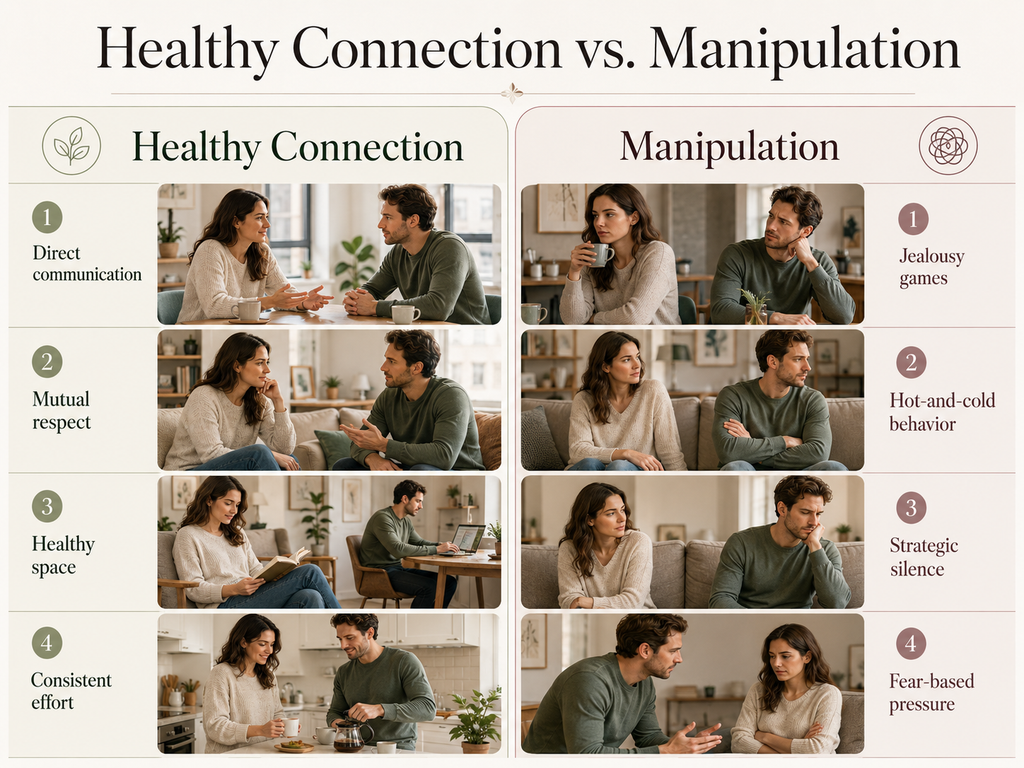
The same distinction matters with commercial dating material. Make Him Worship You currently markets techniques with names such as “The Secret Emotional Life of Men,” “Testosterone Telepathy,” “The Shields Down Method,” and other attraction-oriented concepts. The sales page also uses strong claims about making a man “worship,” become “addicted,” or become sexually “obsessed,” which are seller marketing claims rather than guaranteed psychological outcomes.
A healthier filter is simple: does the advice help you understand, communicate, regulate conflict, and protect mutual choice, or does it mainly promise control over his reactions? Keep ideas that support consent, clarity, emotional safety, and reciprocity. Be cautious with any framework that suggests one sentence, gesture, or “trigger” can reliably override another adult’s autonomy.
If your biggest challenge is interpreting his communication, vulnerability, and withdrawal patterns, you can review Make Him Worship You’s structured material critically and use only guidance that supports respect, consent, and mutual communication.
9. Study His Individual Pattern More Than the “Male Rule”
The most accurate answer to how to understand male psychology in relationships is ultimately personal observation. Over time, you can build a realistic map of how he behaves when secure, stressed, affectionate, ashamed, angry, excited, uncertain, or overwhelmed. That map is more useful than a generic list of “what all men want.” It helps you predict what communication style is likely to work while still leaving room for him to surprise you.
Use repeated questions as data. Does he repair after conflict? Does he communicate more openly when he feels accepted? How does he show care, respond to boundaries, and react when you need reassurance? Patterns reveal emotional maturity and compatibility better than generic claims about masculinity.
Signs to Watch
- He becomes more open over time rather than more secretive.
- He can ask for space without disappearing indefinitely.
- He respects your needs even when they differ from his.
- He responds to your bids for connection.
- He can hear feedback without turning every concern into an attack.
- He shows care consistently in ways you can actually recognize.
- He is curious about your psychology too.
Signs of emotional maturity in a man → how to recognize a secure and emotionally available partner
When “Understanding Him” Becomes Too Much Work
Learning how to understand male psychology in relationships should make the relationship clearer, not turn you into a full-time interpreter. If you constantly search for hidden reasons behind disrespect, inconsistency, lying, avoidance, or cruelty, psychology may be becoming a way to rationalize behavior that simply does not work for you. An explanation can create compassion without creating an obligation to stay.
You do not need to protect him from all discomfort. Healthy intimacy includes hearing difficult things respectfully. If you must choose every word perfectly while he can communicate however he wants, the relationship is not balanced.
Before You Explain It Away: Ask whether knowing why he does something changes what you need to do about it. If a repeated pattern still violates your boundaries after honest conversation, the explanation may matter less than the behavior.
Where Make Him Worship You May Fit
The official site currently lists Make Him Worship You for $37 and states that buyers receive a membership login for digital access on a phone, tablet, or computer. It also advertises a 60-day money-back/satisfaction guarantee. The long-form page lists three additional gifts: When To Sleep With A Man, Unstoppable Confidence, and The Good Girl’s Guide To Texting Dirty. These are current seller-provided details and can change.
The product may interest an adult reader who prefers direct, gender-specific material about male emotions, attraction, communication, and vulnerability. It may be a poor fit if you dislike broad claims or sales language about control, addiction, obsession, or “rewiring” behavior. Treat it as one perspective, not a universal map of male psychology.
If you prefer a highly structured male-perspective format, you can consider Make Him Worship You as an optional supplement—not a replacement for direct communication, professional support when needed, or your own judgment about the relationship.
What Healthy Understanding Actually Looks Like
Once you understand how to understand male psychology in relationships, the goal is not to become better at managing a man. It is to become better at seeing him accurately while making yourself equally visible. You learn how he processes stress, affection, vulnerability, respect, independence, and conflict, and he learns the same about you. That mutual knowledge makes communication more precise because both of you spend less time guessing.
Healthy understanding also reduces unnecessary personalization. His need for quiet may not mean he is losing interest; your desire for reassurance may not mean you are needy. When both partners can explain their inner experiences without shame, differences become easier to negotiate. The relationship becomes a place where two individual psychologies meet rather than a battle between stereotypes about men and women.
So use male psychology carefully. Let research challenge assumptions, let observation show you his real patterns, and let conversation verify what those patterns mean. The strongest answer to how to understand male psychology in relationships is not “learn the secret male code.” It is “learn this person deeply, require mutual understanding, and judge the relationship by what both of you consistently do with that knowledge.”
Do men think differently from women in relationships?
Some average gender differences may appear in research, but they do not provide a reliable script for every individual. Personality, upbringing, attachment style, culture, experience, and communication habits can matter as much as or more than gender.
Why do some men go quiet when they are stressed?
Some people process stress internally before they can explain what they feel. The important question is whether your partner eventually returns to communicate or uses silence repeatedly to avoid difficult conversations.
How can I understand what a man needs emotionally?
Observe his repeated behavior and ask direct questions about what makes him feel supported, understood, respected, and connected. Avoid assuming that all men want the same kind of emotional support.
Does giving a man space improve a relationship?
Healthy space can support autonomy when it is transparent and reciprocal. Deliberately disappearing to trigger pursuit or anxiety is different from taking reasonable independent time.
How do men show emotional connection?
It varies. Connection may appear through conversation, practical support, affection, shared activities, time, humor, physical closeness, future planning, or small everyday bids for attention.
How do I know if I am overanalyzing male psychology?
If you spend more time explaining his behavior than he spends communicating with you, step back. Direct conversation, consistent actions, and respect for your boundaries are usually more useful than finding a complicated psychological explanation for every behavior.