

If you are asking why did my ex come back after no contact, the return can feel more significant than an ordinary text. You may have spent weeks or months rebuilding your routine, resisting the urge to reach out, or accepting that the relationship was over, only for your ex to suddenly message, call, apologize, or suggest meeting. That contact can reflect real feelings, but it does not automatically mean they are ready for a healthy second chance.
The most important mistake is treating the end of no contact as proof that the strategy “worked” or that reconciliation is guaranteed. Silence can create space, but people return for many reasons: nostalgia, loneliness, curiosity, regret, reassurance, or genuine reconsideration. This guide explains eight realistic reasons, how to read what happens after the first message, and how to respond without chasing or rushing back into the old relationship.
Quick Takeaway: The first message ends the silence. The pattern that follows tells you whether the return is meaningful.
Why Did My Ex Come Back After No Contact? Start With What the Silence Changed
When you wonder why did my ex come back after no contact, look at what the period apart actually did. Did it lower conflict, remove pressure, make the loss feel more real, give your ex time to miss the relationship, or simply create curiosity about whether you had moved on? No contact itself does not force a particular emotional outcome. It mainly changes the amount of access and interaction between two people.
Research on on-again/off-again relationships helps explain why former partners can return after a breakup. In a study of 274 people who had experienced cyclical relationships, lingering feelings were a predominant reason for renewals, while uncertainty about what the previous breakup meant and not dating other people after the breakup were also associated with renewed relationships. That does not tell you why your ex returned, but it shows that reconciliation can emerge from several overlapping motives.
Decision Rule: Do not ask only, “Why did they break no contact?” Ask, “What do they consistently do after they reconnect?”
1. Their Feelings Became Clearer With Distance
Sometimes the silence gave your ex enough distance to recognize that their attachment did not disappear. Without daily contact, arguments, or relationship pressure, they may have noticed how much they missed your presence, personality, routines, or emotional connection. The absence can make feelings easier to identify because they are no longer mixed with the immediate stress of the breakup.
For why did my ex come back after no contact, this is one of the most hopeful explanations, but feelings are only the beginning. Someone can miss you deeply and still be uncertain about commitment, compatibility, or the problem that ended the relationship. Stronger evidence appears when the return includes consistent communication, accountability, and a willingness to talk about what would actually be different.
Practical Example: “I missed talking to you” tells you that the silence affected them. “I missed you, I understand why we broke up, and I want to discuss whether we can do this differently” gives you useful information.
2. Nostalgia Became Stronger Than the Breakup Emotion
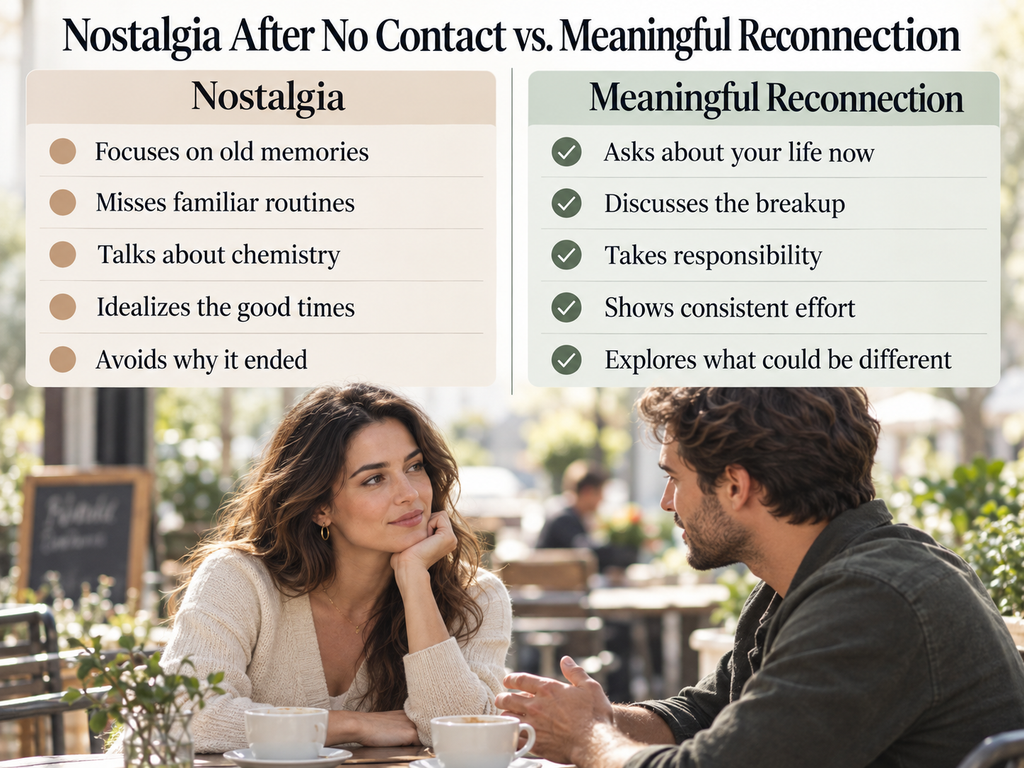
Immediately after a breakup, anger, disappointment, defensiveness, or relief can dominate. With time and less contact, those intense emotions may settle, while memories of affection, shared humor, trips, routines, and emotional support become easier to access. Your ex may return because the positive parts of the relationship are now more emotionally vivid than they were during the breakup.
Nostalgia can be sincere without being future-focused. If your ex spends most of the conversation remembering old moments but avoids the breakup itself, they may miss the relationship experience more than they are ready to rebuild it. Notice whether the memories lead into present-day curiosity, accountability, and discussion of what would need to change.
3. They Became Curious About Your Life Without Them
No contact removes the steady stream of information your ex used to receive. They may no longer know what you are doing, who you spend time with, whether you are dating, or how much your life has changed. That uncertainty can create curiosity.
Curiosity becomes more meaningful when it expands beyond checking your availability. If your ex asks thoughtful questions about your work, goals, family, or personal changes and remembers your answers, they may be trying to understand who you are now. If they mainly want to know whether you are still available and lose interest once reassured, the return may be more about access than reconciliation.
After substantial independent value, some readers prefer a structured framework for handling renewed contact. The current women’s order page for The Ex Factor 2.0 lists a 163-page interactive e-book, a 20-part video course, a three-part bonus video series, three additional e-books, immediate digital access, a $47 price, and a 60-day money-back guarantee.
If you want a structured breakup-and-reconnection framework to compare with the independent guidance here, you can consider whether The Ex Factor 2.0 fits your situation and boundaries.
4. They Felt Lonely and Reached for Familiar Comfort
No contact can remove a source of emotional support that both people had become used to. Your ex may have returned during a lonely weekend, stressful period, holiday, family problem, or disappointing experience with dating because you still represent familiarity and comfort. The contact may be emotionally sincere without reflecting a clear decision about the relationship.
The timing and follow-through matter. If your ex appears mainly when they feel low, receives reassurance from you, and then disappears again, the contact may be regulating loneliness rather than building toward reconciliation. If they remain present after the emotional moment passes, initiate again, and become clearer about what they want, the meaning changes.
Common Mistake: Do not immediately restore relationship-level emotional support because your ex sounds vulnerable. Offer only the level of access you are comfortable giving while you observe whether the contact becomes reciprocal and consistent.
5. They Started Questioning the Breakup
Distance can create perspective. Your ex may have believed ending the relationship was the right decision, then later realized they acted impulsively, underestimated the loss, or misunderstood what was actually causing the conflict. They may also have expected life after the breakup to feel better and discovered that the decision did not resolve the dissatisfaction they hoped it would.
This is where why did my ex come back after no contact can shift from simple missing to genuine reconsideration. Look for specific reflection rather than vague regret. “I think I made a mistake” matters, but “I realize I shut down every time we tried to discuss commitment, and I understand how that damaged us” gives you something concrete to evaluate.
Regret is not the same as readiness. The next question is whether your ex can translate insight into different behavior.
6. They Noticed You Were Moving Forward
No contact often changes the dynamic because your ex no longer has constant confirmation that you are still emotionally available. You may have become more focused on work, friends, routines, healing, or dating. If your ex becomes aware that your life is moving without them, the breakup may suddenly feel more final.
That realization can trigger several different reactions: jealousy, fear of replacement, regret, curiosity, or a sincere desire to reconsider the relationship. Do not deliberately create jealousy to provoke a comeback. The useful evidence is what your ex offers after returning—whether they move beyond urgency into consistency, accountability, and respectful communication.
What This Means: A return triggered by your independence may show that the loss became more real to them. It does not automatically show that they are ready to rebuild.
7. They Wanted to Test Whether the Door Was Still Open
Some exes break the silence with a low-risk message because they want to know whether you will respond. A simple “Hey,” a birthday message, a shared memory, or a practical question can test whether contact is still possible without requiring them to admit a deeper motive. Your response gives them information about whether emotional access remains.
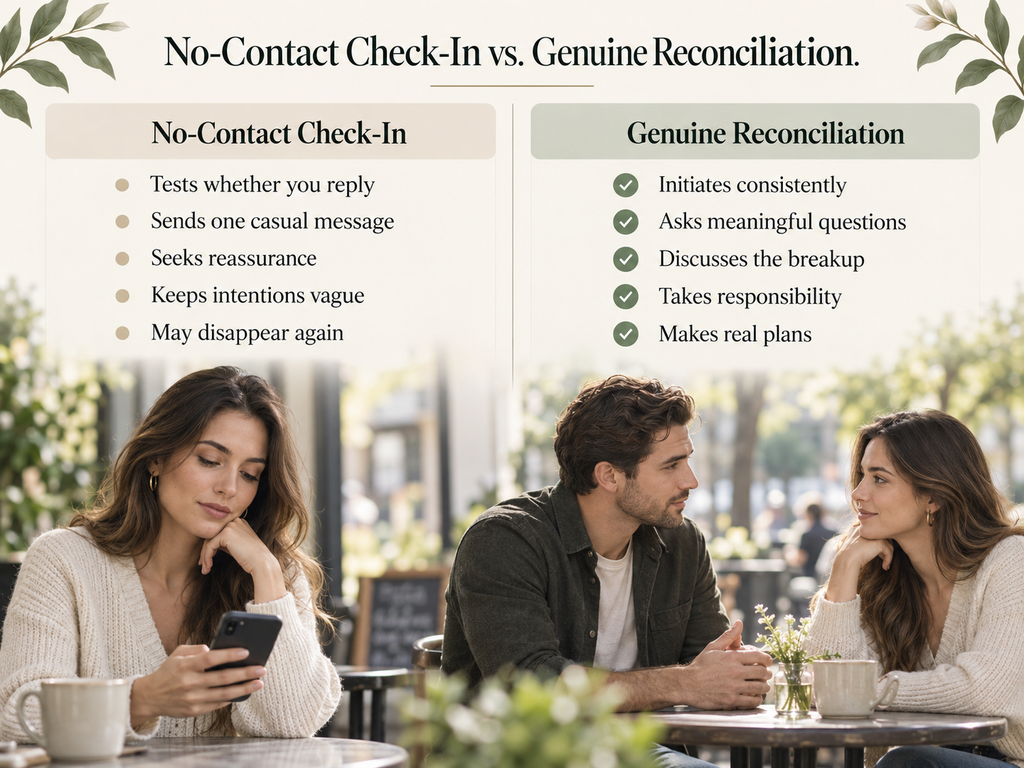
The most revealing part comes afterward. If they become warm until they know you still care, then quickly fade, reassurance-seeking may be the main driver. If they keep initiating, ask meaningful questions, discuss the breakup, and gradually become more direct, the first message may have been a cautious entry point into real reconnection.
The seller behind The Ex Factor 2.0 describes a “3R” framework of recovery, rekindling, and reattraction and includes guidance for the stage when an ex begins contacting you again. That is the seller’s description of its system rather than independent evidence that any specific technique can determine another person’s choice.
If your ex broke no contact and you feel stuck between encouraging the conversation and protecting yourself from another vague cycle, you can review The Ex Factor 2.0’s structured communication material while keeping only guidance that supports honest, voluntary, two-way choices.
8. They Genuinely Want to Explore Reconciliation
Sometimes the return is what it appears to be: your ex has had time to think and now wants to explore another chance. Genuine reconciliation intent usually becomes less mysterious after contact resumes. Your ex does not only send one emotional message; they keep showing up in ways that require time, vulnerability, and follow-through.
Look for progression. Do they initiate more than once, ask about your present life, discuss why the relationship ended, take responsibility, make and keep plans, respect your pace, and eventually talk clearly about another relationship? Those behaviors do not guarantee success, but they are much more useful than the fact that no contact ended.
Does Breaking No Contact Mean Your Ex Wants You Back?
Not necessarily. Breaking no contact means your ex wanted enough connection, information, comfort, or clarity to reach out. It does not tell you whether they want a conversation, friendship, reassurance, closure, physical intimacy, or reconciliation.
When asking why did my ex come back after no contact, separate contact from intention. A person who wants another chance usually becomes increasingly specific over time. The conversation moves from “Hey, how have you been?” toward accountability, plans, and discussion of what would need to be different.
Why Did My Ex Come Back After No Contact and Then Disappear?
This pattern can happen when the desire to reconnect is stronger than the person’s readiness to deal with what reconnection actually requires. Your ex may feel lonely or nostalgic, reach out, experience emotional intensity once the connection returns, and then withdraw when old fears or uncertainty reappear.
It can also be reassurance-seeking. Once they know you still care, the anxiety that motivated the message may decrease, so they no longer feel the same urgency to keep talking. If this happens repeatedly, judge the entire cycle rather than giving each comeback a fresh interpretation.
Decision Check: If every return ends at the same point, ask whether anything is progressing—or whether the silence and comeback have simply become part of the relationship pattern.
What Should You Do When Your Ex Breaks No Contact?
First, decide whether you actually want contact. No rule says you must respond simply because your ex reached out. If the relationship was generally safe and communication is welcome, a calm, proportionate reply can give you more information without immediately reopening the relationship.
Keep the first exchange simple. Match the tone of the message, avoid pouring out months of emotion immediately, and let your ex contribute effort. If they want a meaningful reconnection, they can help carry the conversation rather than relying on you to turn one message into a relationship.
How to Tell Genuine Reconciliation From a No-Contact Check-In
A no-contact check-in is usually about seeing whether communication is possible. Genuine reconciliation becomes progressively more specific and reciprocal.
Stronger Signs of Reconciliation Intent Include:
- they initiate more than once;
- they remain engaged after you respond;
- they ask meaningful questions about your present life;
- they discuss why the relationship ended;
- they take specific responsibility;
- they make and keep real plans;
- they show relevant behavioral change;
- they respect your pace and boundaries;
- they directly discuss whether another relationship makes sense.
A cluster of these behaviors matters more than one message, even after a long silence.
Can No Contact Actually Help a Relationship?
Time apart can reduce immediate conflict and create room for reflection, but no contact is not a universal method for producing reconciliation. Its healthiest purpose is usually clearer thinking, healing, and boundaries rather than trying to manipulate another person into returning.
Research on relationship churning offers a useful caution. In a sample of 792 young adult daters and cohabitors, nearly half reported at least one reconciliation, showing that breakup-and-reunion patterns were common in that population. Reuniting, however, is not the same as creating stability; if the same cycle restarts, the silence alone did not solve the relationship problem.
When You Should Be Cautious About Reopening the Relationship
Be cautious if your ex returns with intense emotion but avoids saying what they want, repeatedly disappears after receiving reassurance, pressures you to restore closeness quickly, or refuses to discuss why the relationship ended. Also watch whether the same unreliability, dishonesty, avoidance, or incompatibility that caused the breakup appears immediately again.
If the previous relationship involved coercion, stalking, threats, violence, or serious repeated boundary violations, renewed contact should not be romanticized as proof of love. Prioritize safety and appropriate support rather than reopening access because the silence ended.
Where The Ex Factor 2.0 May Fit
The current women’s order page for The Ex Factor 2.0 lists a 163-page interactive e-book, a 20-part video course, a three-part bonus video series, How To Read A Man, Why Men Pull Away, and Flawless Fat Loss Guide. The page lists a $47 price, immediate digital access, ClickBank processing, and a 60-day money-back guarantee.
The program may appeal to readers who want a structured framework once an ex resumes contact. Its promotional presentation also promotes ignoring an ex and what the seller calls “covert jealousy,” alongside strong influence claims; those are seller marketing claims, so manipulation-based tactics are better filtered through consent, boundaries, accountability, and mutual choice.
If you prefer a structured ebook-and-video reconciliation framework and are comfortable applying that filter, you can consider The Ex Factor 2.0 as optional support rather than a substitute for compatibility, direct communication, healthy boundaries, or your own judgment.
Why Did My Ex Come Back After No Contact? The Bottom Line
The answer to why did my ex come back after no contact may involve lingering feelings, nostalgia, curiosity, loneliness, breakup regret, your growing independence, reassurance-seeking, or a genuine desire to reconcile. More than one reason can be true at the same time.
Do not let the first message decide what the return means. Watch whether your ex remains present after reassurance, discusses the breakup honestly, takes responsibility, respects your boundaries, makes real plans, and becomes clearer about what they want. Those choices tell you more than the fact that the silence ended.
The goal is not to prove that no contact “worked.” It is to understand whether the relationship being offered now is healthier, clearer, and more mutual than the one that ended.
Why did my ex break no contact and reach out?
Your ex may still have feelings, feel nostalgic or lonely, wonder how you are doing, regret the breakup, seek reassurance, or genuinely want to explore reconciliation. Their behavior after the first message matters more than the message itself.
Does my ex breaking no contact mean they want me back?
Not automatically. Reaching out shows they wanted some form of connection, but you still need to distinguish curiosity, comfort, or reassurance from consistent reconciliation effort.
Why did my ex come back after no contact and disappear again?
They may have felt lonely or nostalgic, wanted reassurance that you still cared, or become overwhelmed once the emotional connection returned. Repeated disappearing is important information about readiness.
Should I reply when my ex breaks no contact?
If contact is welcome and the relationship was safe, a calm, proportionate response can be reasonable. You do not need to immediately reopen the relationship or share everything you have felt during the silence.
How do I know whether my ex came back for genuine reconciliation?
Look for repeated initiation, breakup accountability, changed behavior, reliable plans, respected boundaries, reciprocal communication, and increasing clarity about another chance.
Does no contact always make an ex come back?
No contact cannot guarantee another person’s decision. Its healthier value is creating space for emotional regulation, clearer thinking, boundaries, and recovery after a breakup.