

If you are looking for signs your ex is jealous after the breakup, focus on patterns that show emotional reactivity rather than trying to decode every like, story view, or awkward comment. Jealousy can appear when an ex realizes you are less available or moving forward. But jealousy does not automatically mean they want the relationship back, and it certainly does not prove that reconciliation would be healthy.
The urgent mistake is treating jealousy as romantic proof. An ex can feel possessive, unsettled, curious, or afraid of being replaced while still being unwilling to rebuild the relationship. This guide explains nine stronger clues, weaker signals that are easy to misread, and what to do if jealousy starts showing up after the breakup.
Quick Takeaway: Jealousy tells you your ex is emotionally reacting to the possibility of losing access or importance. What matters next is whether they turn that reaction into respectful, direct, and consistent behavior.
Signs Your Ex Is Jealous After the Breakup: Look for a Pattern, Not One Reaction
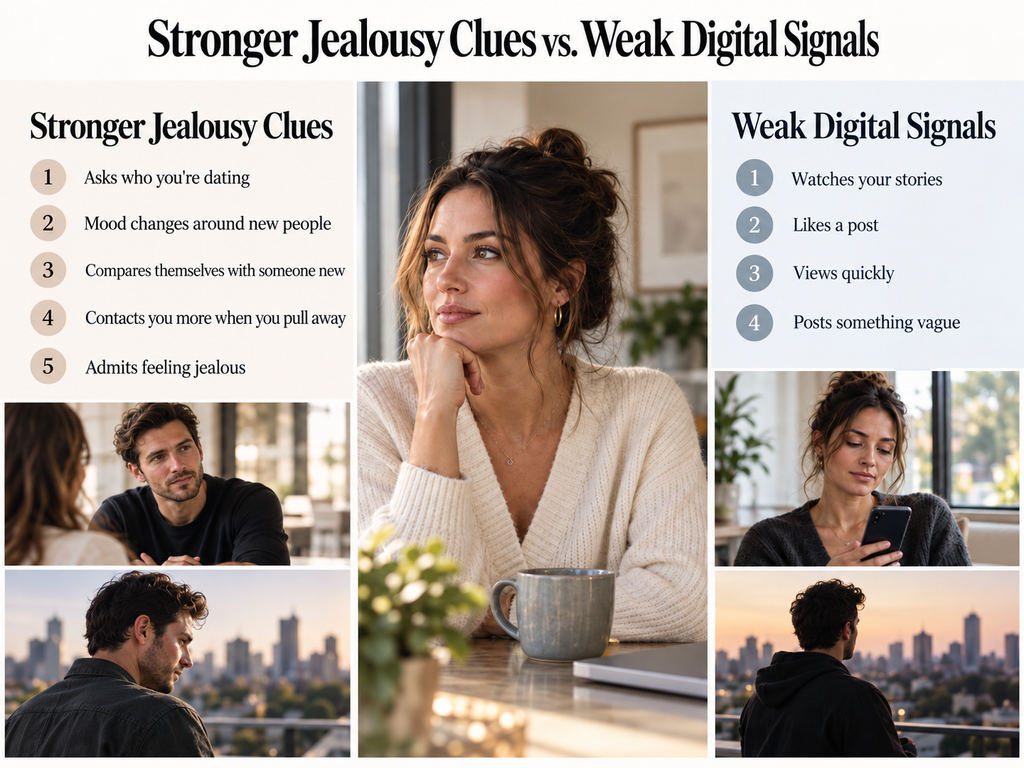
When evaluating signs your ex is jealous after the breakup, start with context. A single story view, vague comment, or unusual mood can have many explanations. Jealousy becomes more plausible when several behaviors cluster around the same trigger, such as you spending time with someone new, becoming less available, or appearing more independent.
Research on post-breakup social-media monitoring supports a cautious interpretation. A study of 431 adults found that emotional distress after a breakup predicted monitoring an ex on social-networking sites, while separate research linked post-breakup Facebook surveillance with greater distress and longing. These findings do not prove jealousy in any specific ex, but they show that online monitoring can reflect unresolved emotional activation rather than a clear plan to reconcile.
Decision Rule: Give more weight to direct questions, repeated reactions, and behavior that changes around perceived romantic competition than to passive social-media activity alone.
1. They Suddenly Ask Who You Are Spending Time With
One of the clearer signs is a sudden increase in questions about your social life. Your ex may ask who you were with, whether someone is “just a friend,” or how you know a person they saw around you. The questions may sound casual, but the timing and repetition can reveal that your availability matters to them.
If the curiosity becomes noticeably stronger around potential romantic competition, jealousy is more plausible. Still, do not assume that reaction means they are ready to reconcile; they may simply dislike losing their previous place in your life.
Practical Example: “Who was that guy in your photo?” carries more jealousy potential when it appears alongside repeated questions about whether you are dating than when it is a one-off question with no other pattern.
2. Their Mood Changes When Dating or New People Come Up
Another of the signs your ex is jealous after the breakup is a noticeable emotional shift when dating enters the conversation. Your ex may become quieter, more sarcastic, defensive, unusually dismissive, or abruptly end a previously warm exchange. The key is not the exact reaction but the contrast between how they were behaving before and after the topic appeared.
Jealousy often appears indirectly because admitting it requires vulnerability. An ex may say they “do not care” while asking more questions, becoming colder, or changing the subject. Repeated emotional changes around the same trigger matter more than one awkward reaction.
Avoid deliberately bringing up dates to test the reaction. Manufactured jealousy can create drama without giving you reliable information about whether your ex wants a healthier relationship.
3. They Start Monitoring Your Social Media More Closely
Your ex may begin watching stories more quickly, checking more consistently, liking older content, or becoming more visible on your social-media activity after the breakup. If that increase appears specifically when your life seems more active or when new people become visible, it can fit a jealousy pattern.
Passive monitoring is weaker evidence than direct communication. Post-breakup surveillance research has linked monitoring with emotional distress and longing, so frequent viewing can reflect unresolved attachment without indicating a genuine desire to reunite. A 2026 Instagram study similarly found breakup-related emotional distress was the most consistent factor associated with post-breakup monitoring in its young-adult sample.
Some readers prefer a structured framework for interpreting post-breakup behavior without reacting to every signal. The current women’s offer for The Ex Factor 2.0 lists a 163-page interactive e-book, a 20-part video course, a three-part bonus video series, three additional e-books, immediate digital access, a $47 price, and a 60-day money-back guarantee.
If you want a structured breakup-and-reconnection framework to compare with the independent guidance here, you can consider whether The Ex Factor 2.0 fits your situation and boundaries.
4. They Make Dismissive Comments About People You Might Date
Jealousy can appear as criticism rather than confession. Your ex may suddenly find something wrong with anyone they think you could be interested in, describing that person as boring, untrustworthy, immature, or “not your type.” The criticism may be framed as concern, humor, or casual opinion.
For signs your ex is jealous after the breakup, look at whether the comments are proportionate. A legitimate concern based on real information is different from repeatedly belittling people simply because they might become romantic competition. If your ex has little evidence but strong negative opinions, jealousy may be part of the reaction.
Common Mistake: Do not use their criticism as proof that they secretly want you back. Jealousy can coexist with possessiveness, insecurity, or unresolved attachment without producing healthy reconciliation intent.
5. They Reach Out More When You Become Less Available
An ex may become more attentive when you stop initiating, make plans without them, or seem less emotionally available. They may suddenly text more often, ask to see you, or revive old inside jokes after a period of distance. The timing can suggest that the possibility of losing access has become emotionally uncomfortable.
This clue is more useful when the change is clearly linked to your growing independence. Yet it is still important to watch what happens after they receive your attention again. If the new effort disappears as soon as they know you still care, the pattern may be reassurance-seeking rather than a serious attempt to reconnect.
A stronger sign appears when renewed contact remains consistent even after the immediate fear of losing you has passed.
6. They Compare Themselves With Someone New in Your Life
Your ex may ask whether someone is more attractive, successful, funny, emotionally available, or compatible than they were. They might also compare their history with you to the newer connection, reminding you of what the two of you shared or emphasizing ways they think they know you better.
Comparison can reveal perceived competition because your ex is evaluating what another person might mean for their former place in your life. If comparisons turn into pressure, insults, or demands that you defend your choices, the behavior is no longer a useful romantic clue; it is a boundary issue.
You do not need to reassure your ex that nobody could replace them.
7. They Become More Flirtatious or Nostalgic After Seeing You Move Forward
Sometimes jealousy does not look angry at all. Your ex may become warmer, flirtier, or unusually nostalgic after seeing signs that you are moving on. They may bring up favorite memories, compliment you more, or remind you of the chemistry you once had.
Timing is the important clue. If nostalgia appears after your independence becomes visible, it may reflect a wish to restore emotional relevance. But nostalgia is still not a plan; ask whether your ex can move from “remember us?” into a serious conversation about what would change.
The seller behind The Ex Factor 2.0 describes a “3R” framework of recovery, rekindling, and reattraction and includes material for the stage when post-breakup contact resumes. That is the seller’s framework, not evidence that a particular tactic can control an ex’s feelings.
If jealousy or renewed attention has turned into direct contact and you are unsure how to move from emotional signals into a clearer reconciliation conversation, you can review The Ex Factor 2.0’s structured communication material while keeping only guidance that supports respectful, voluntary, two-way choices.
8. They React Strongly to the Idea That You Could Be Completely Over Them
An ex may seem relatively calm until they believe you are genuinely moving on. A statement such as “I think I am ready to date again” or simply your reduced availability can suddenly produce more questions, defensiveness, sadness, or renewed contact. The reaction may show that the finality of the breakup feels different from the breakup itself.
This does not mean you should announce that you are over them to create a response. If the reaction appears naturally, observe it without rewarding dramatic behavior. A jealous reaction is most useful as information about their emotional state, not as a lever you can pull to make reconciliation happen.
9. They Directly Admit Feeling Jealous or Uncomfortable
The clearest of the signs your ex is jealous after the breakup is direct admission. Your ex may tell you that seeing you with someone else is difficult, that they feel jealous, or that they are struggling with the idea of you moving on. Direct communication reduces the amount of guessing required.
Even then, ask what the admission actually means. Jealousy can show that feelings remain, but it does not automatically establish commitment, compatibility, or change. A healthier conversation sounds less like “I cannot stand anyone else having you” and more like “I realized I still have feelings, and I would like to talk about whether rebuilding makes sense.”
Weak Signs That Do Not Prove Your Ex Is Jealous
Some behaviors are easy to overread because they happen online and are highly visible. Watching stories, liking a post, appearing in your viewer list quickly, unfollowing and refollowing, or posting attractive photos shortly after you do may feel meaningful. Any of those could fit jealousy, but they also have ordinary explanations.
The same is true of a mutual friend mentioning your ex, a vague breakup quote, or sudden online activity. Unless the behavior connects clearly to you or a perceived romantic competitor, treat it as ambiguous. Looking for signs your ex is jealous after the breakup should not turn into daily surveillance.
What This Means: Passive clues can support a broader pattern, but they should not be the foundation of your conclusion.
Does Jealousy Mean Your Ex Still Loves You?
Not necessarily. Jealousy can come from lingering love, but it can also come from attachment, habit, ego, possessiveness, uncertainty, fear of replacement, or difficulty accepting that the relationship has changed. Human emotions do not always line up neatly with relationship decisions.
Research published in 2025 found an association between romantic jealousy and greater ambivalence, or mixed feelings, toward a partner. The study involved ongoing relationships, not ex-partners, so it cannot diagnose post-breakup behavior. It still illustrates a useful principle: jealousy can coexist with conflicting emotions.
Look beyond the feeling. Is your ex also accountable, respectful, consistent, and willing to discuss what would be different?
Does Jealousy Mean Your Ex Wants You Back?
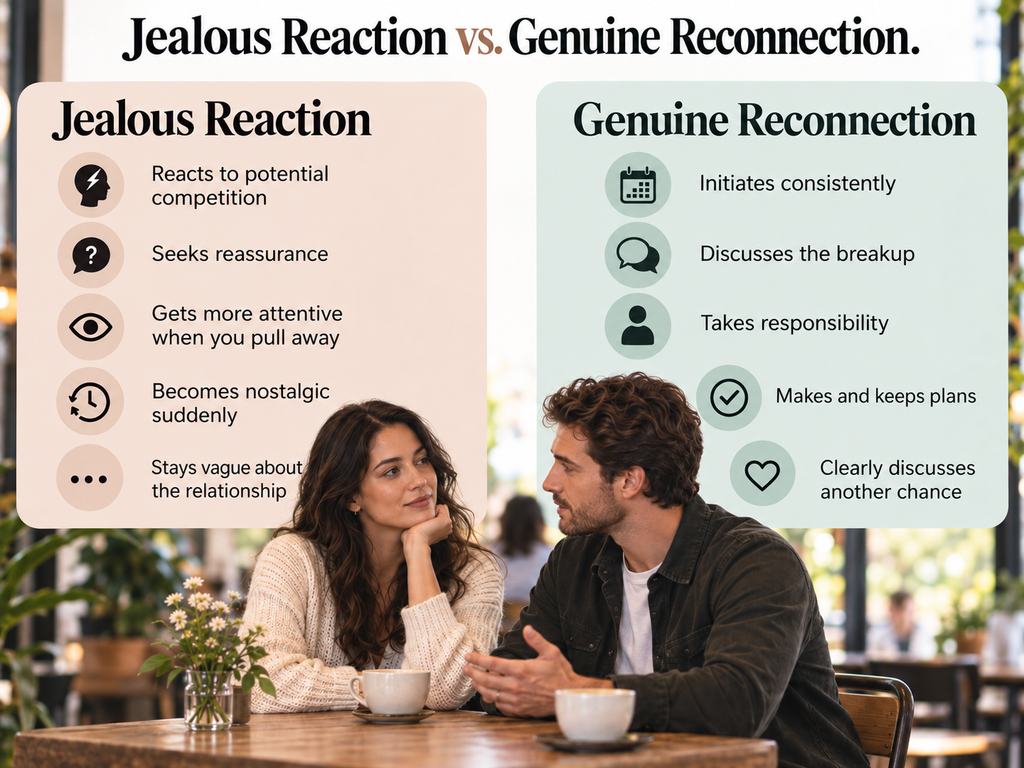
Jealousy can increase the possibility that your ex still feels emotionally connected, but it is not enough to establish reconciliation intent. Wanting you back requires a decision, not only a reaction. The strongest evidence comes when your ex initiates directly, discusses the breakup, takes responsibility, and makes consistent plans.
This distinction protects you from confusing possessiveness with commitment. Someone can dislike seeing you move on while still refusing to offer the relationship you want. If your ex becomes jealous but stays vague about reconciliation, believe both facts: the emotion may be real, and the commitment may still be absent.
What Should You Do If Your Ex Seems Jealous?
Do not rush to reassure them, provoke more jealousy, or use another person as leverage. Stay normal. If you are single, continue living your life without turning your dating choices into a message aimed at your ex. If you are talking with your ex, let their jealousy become their responsibility to communicate respectfully.
If the behavior is mild and respectful, observe whether your ex becomes clearer. If they repeatedly question you, criticize people you date, or act entitled to information they no longer have a right to receive, set a boundary. You can acknowledge that the breakup is difficult without giving them control over your social life.
Your response should produce more clarity, not more competition.
How to Tell Jealousy From Genuine Reconnection Intent
Jealousy is reactive; reconciliation is constructive. Jealousy focuses on the possibility of losing you to someone else. Genuine reconnection focuses on what the two of you would need to build together.
Stronger Signs Jealousy May Be Turning Into Reconnection:
- They admit their feelings without blaming you.
- They initiate contact consistently.
- They ask about your life without interrogating you.
- They discuss why the relationship ended.
- They take responsibility for their part.
- They make and keep real plans.
- They respect your boundaries and your right to choose.
- They explain what they would do differently.
- They directly ask whether reconciliation is possible.
If only the jealousy appears, keep your expectations modest. The relationship question is not “Do they react when I move on?” but “Can they participate in rebuilding something healthier?”
When Jealousy Becomes a Red Flag
Jealousy becomes more concerning when it turns into controlling behavior. Repeated demands to know where you are, insults toward people you spend time with, pressure to stop dating, attempts to access private accounts, harassment, threats, or showing up unexpectedly after you asked for distance are not romantic evidence. They are boundary problems.
You do not have to reward intrusive behavior because the person is your ex. If you feel unsafe or the behavior escalates into stalking, coercion, threats, or violence, prioritize safety and appropriate local support rather than a reconciliation conversation.
Where The Ex Factor 2.0 May Fit
The current women’s order page for The Ex Factor 2.0 lists a 163-page interactive e-book, a 20-part video course, a three-part bonus video series, How To Read A Man, Why Men Pull Away, and Flawless Fat Loss Guide. The seller lists a $47 price, immediate digital access, ClickBank processing, and a 60-day money-back guarantee.
The program may appeal to readers who want a structured breakup-and-reconnection system once communication becomes direct. Its sales presentation also promotes what the seller calls “covert jealousy” and makes strong claims about influencing an ex’s emotions. Those are seller marketing claims, not dependable predictions, and deliberately provoking jealousy conflicts with the healthier approach here. Filter out manipulation-based tactics in favor of consent, honesty, boundaries, and mutual willingness.
If you prefer a structured ebook-and-video reconciliation program and are comfortable applying that filter, you can consider The Ex Factor 2.0 as an optional supplement rather than a substitute for compatibility, healthy communication, mutual effort, or your own judgment.
Signs Your Ex Is Jealous After the Breakup: The Bottom Line
The strongest signs your ex is jealous after the breakup are not random digital breadcrumbs. They are repeated emotional reactions around your growing independence or potential romantic competition: questions about who you are seeing, mood changes, increased monitoring, dismissive comments, renewed contact when you pull away, comparisons, sudden nostalgia, discomfort when you move on, or direct admissions of jealousy.
Even a clear pattern does not tell you whether reconciliation is right. Jealousy shows emotional activation; healthy reconnection requires accountability, clarity, consistency, respect, and a mutual decision. Do not create jealousy to test your ex or treat possessiveness as proof of love.
The useful question is not whether your ex is bothered by losing you. It is whether they can respond to that feeling in a mature way that makes the relationship safer and clearer.
What are the strongest signs my ex is jealous after the breakup?
Look for repeated questions about who you are seeing, noticeable mood changes around dating, increased contact when you become less available, comparisons with potential partners, and direct admissions of jealousy.
Does jealousy mean my ex still loves me?
Not necessarily. Jealousy can come from lingering love, attachment, insecurity, possessiveness, fear of replacement, or difficulty adjusting to the breakup.
Why does my ex get jealous if they broke up with me?
Ending a relationship does not instantly remove attachment or emotional reactions. Your ex may still struggle with seeing you move forward even if they originally believed ending the relationship was the right decision.
Does my ex watching my stories mean they are jealous?
Story views alone are weak evidence. Jealousy becomes more plausible when increased monitoring appears alongside reactions to people you may date, direct questions, mood changes, or renewed contact.
Should I make my ex jealous to see if they still care?
No. Deliberately provoking jealousy can create competition and emotional confusion without telling you whether your ex is capable of a healthy reconciliation.
How do I know if jealousy is turning into genuine reconciliation interest?
Look for a shift from reacting to potential competition toward consistent contact, accountability, respectful communication, real plans, and direct discussion about whether rebuilding the relationship makes sense.